
Misplaced keys and shared access cards create unnecessary security risks. Discover how digital credentials improve physical access control with stronger security, centralized management, and complete visibility over who can access your buildings.
Losing a key shouldn't compromise your organization's security. Almost everyone has misplaced a key at some point. While losing a house key is inconvenient, losing a credential that grants access to an office, hotel, healthcare facility, or educational campus can quickly become a serious security issue.
For organizations, replacing keys, tracking down access cards, and ensuring only authorized individuals have access can quickly become both time-consuming and a significant security risk. More importantly, every lost or shared credential introduces uncertainty about who may still have access.
That is why a shift is underway, as organizations are increasingly adopting digital credentials as a modern approach to access control. By moving away from traditional keys and cards, digital credentials provide stronger security, greater visibility, and complete control over the access system.
Limitations of traditional access control
Physical credentials have served organizations for decades, but they present several challenges that become more difficult to manage as organizations grow. Maintaining security while manually issuing, recovering, and replacing credentials can place a significant burden on security teams.
Common challenges include:
- Lost or stolen credentials: Physical credentials can easily be misplaced, forgotten, stolen, or damaged.
- Duplicated: Unauthorized duplication of keys or cards can create vulnerabilities and unprotected spaces in organizations.
- Limited visibility: Traditional credentials often provide little insight into who entered a particular space, when they entered, or whether unauthorized access attempts occurred.
- Credential sharing: A physical key or access card can easily be passed to another person without administrators knowing who entered the building.
- Limited scalability: As organizations expand across multiple buildings or sites, managing hundreds or thousands of physical credentials becomes increasingly complex.
These limitations leave critical gaps in an organization’s security system. Without real-time visibility and centralized control, it can become difficult to manage access, monitor activity, and respond quickly.
What are digital credentials?
Digital credentials are secure access methods that replace or complement traditional physical credentials. Instead of relying solely on a physical key or access card, they are assigned to authorized users and managed through centralized access control software.
Because each credential is linked to a verified user, organizations gain greater accountability, flexibility, and control over who can access specific spaces.
Digital credentials can take several forms depending on an organization's requirements, including:
- PIN code: A unique, individual PIN assigned to a specific user.
- Smart tag: A secure physical credential assigned to one authorized individual.
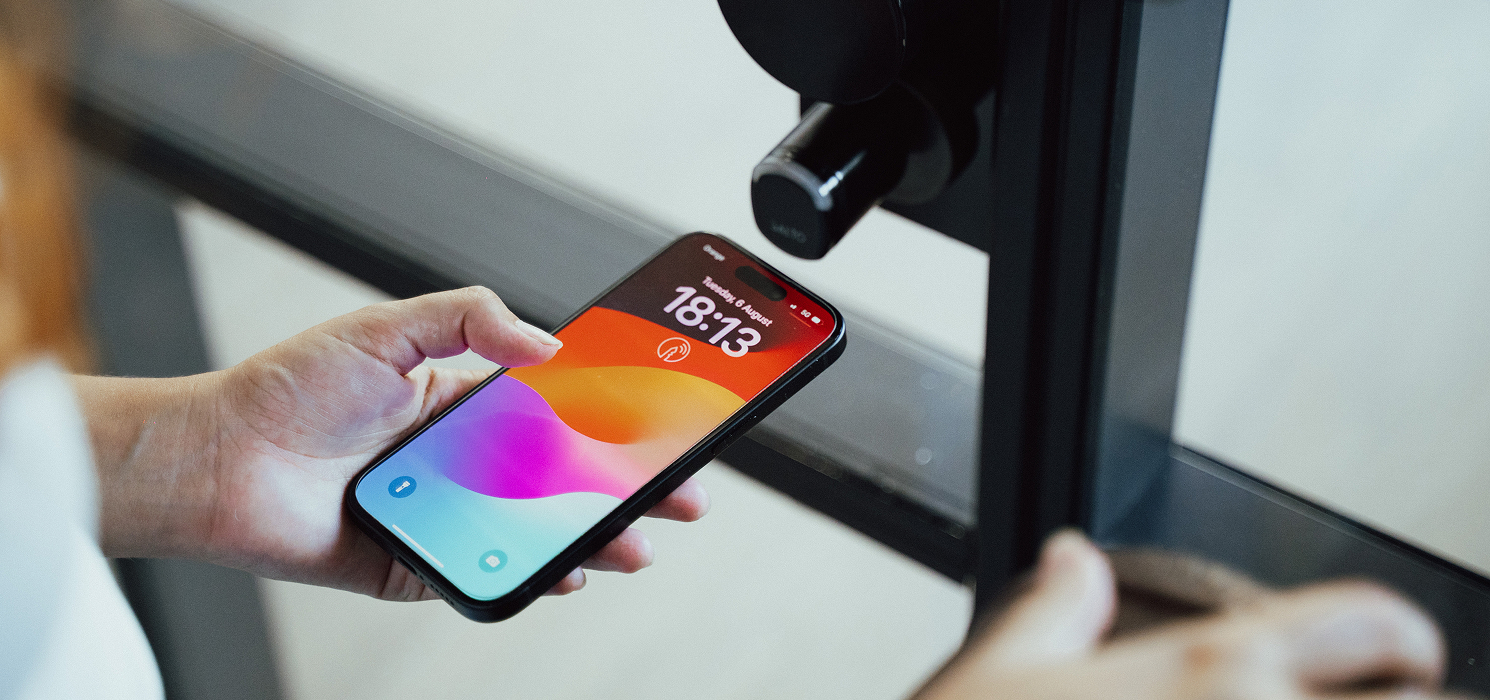
- Digital key: A key on a smartphone mobile app designed to make access more seamless and secure.
- Face recognition: A contactless biometric credential that uses a person's unique facial features to verify identity and grant secure access without the need for a physical credential or mobile device.
Regardless of the format, digital credentials simplify access management while providing stronger security, greater convenience, and improved scalability compared to traditional physical credentials.
Why are digital credentials more secure?
By combining centralized management with individually assigned credentials, digital credentials offer far more than simply replacing a physical key. Organizations can gain stronger security and greater visibility across the system.
Several features make using digital credentials more secure. These include:
User-specific credentials
Every digital credential is assigned to a verified individual rather than simply existing as a transferable key or card. This creates clear accountability by linking every access event to a specific user.
Grant and revoke access instantly
Digital credentials are managed through a single, intuitive platform, allowing administrators to grant, modify, or revoke access permissions in real time. Acting instantly adds an extra layer of security and eliminates the need to constantly replace physical credentials if they are lost, stolen, or changed.
Encryption protects credentials
Unlike traditional credentials, which can be duplicated, digital credentials use encrypted communication between credentials, devices, and readers to help protect against cloning, interception, and unauthorized access. Encryption helps safeguard credential data while supporting secure communication throughout the access control system.
Two-factor authentication (2FA)
Even the strongest digital credentials benefit from additional account protection. Two-factor authentication requires users to verify their identity through two independent authentication methods before accessing their account or credentials, significantly reducing the risk of unauthorized access.
Real-time audit and reporting
Administrators can monitor access activity across buildings, review entry logs, identify rejected access attempts, and generate reports from a centralized platform. This level of visibility makes it easier to investigate incidents and strengthen security policies.
Designed to scale
Managing physical keys becomes increasingly difficult as organizations expand. Digital credentials enable organizations to manage access efficiently across multiple buildings, departments, or global locations while maintaining consistent security policies.
Does digital access control automatically make the system more secure?
Digital credentials provide significantly stronger security capabilities than traditional keys and access cards, but technology alone is only part of a comprehensive security strategy.
Organizations should also establish clear security policies and follow best practices to maximize protection.
These include:
- Enabling two-factor authentication (2FA) for administrator and user accounts.
- Regularly reviewing user permissions to ensure employees only have access to the areas they need.
- Granting and revoking credentials immediately when employee roles change.
- Providing visitors and contractors with time-limited access that expires automatically when it is no longer required.
- Performing routine audits to verify that access permissions remain accurate.
Combining modern technology with strong security policies helps organizations maintain a secure, well-managed access control environment.

Modern access management with Salto
As organizations embrace digital transformation, physical security must evolve alongside it. Traditional keys and access cards no longer provide the flexibility, visibility, or centralized control required to manage today's dynamic workplaces and facilities.
Digital credentials offer a smarter approach by assigning every credential to an authorized user, allowing organizations to manage access remotely, respond instantly to changes, and gain complete visibility into access activity.
Whether through Digital Keys, smart tags, PIN codes, or advanced biometric technologies like Salto XS4 Face, Salto provides flexible digital credential options that help organizations strengthen security while delivering a seamless user experience.
Discover how Salto's smart access solutions can help modernize your organization's physical security.